

Magnesium oxide (MgO), a versatile and widely used compound, has drawn significant attention in various industries. As a reliable magnesium oxide supplier, I am often asked about the electrical conductivity of magnesium oxide. In this blog post, I will delve into the topic, exploring the factors that influence its electrical conductivity and its implications for different applications.

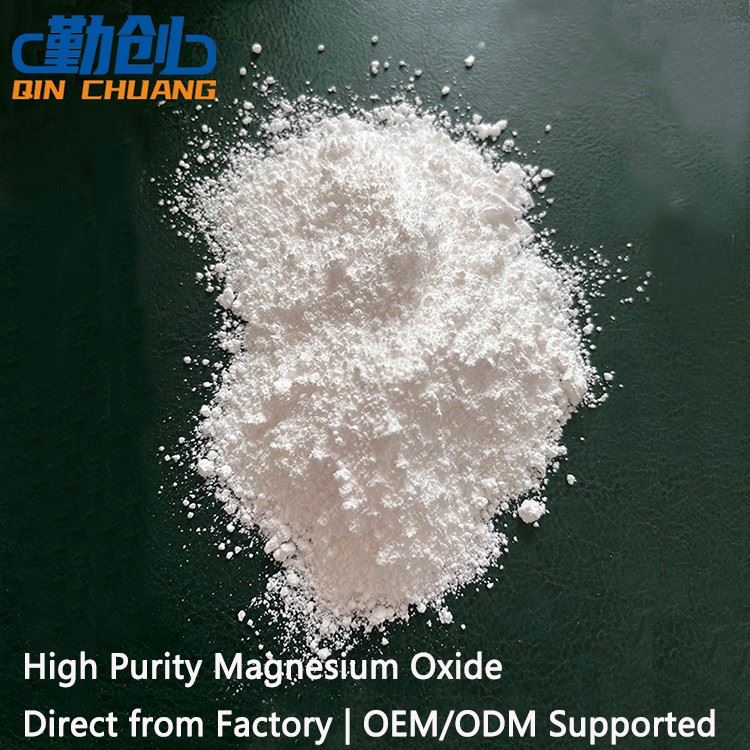
Understanding Magnesium Oxide
Magnesium oxide is an inorganic compound composed of magnesium and oxygen. It exists in a solid state at room temperature and has a high melting point of approximately 2,852°C (5,166°F). MgO is commonly found in nature as the mineral periclase and can also be produced synthetically through various processes.
One of the key properties of magnesium oxide is its excellent thermal and electrical insulation. This property makes it a valuable material in applications where high temperatures and electrical isolation are required, such as in electrical appliances, heating elements, and refractory materials.
Electrical Conductivity Basics
Electrical conductivity is a measure of a material's ability to conduct an electric current. It is determined by the presence of free charge carriers, such as electrons or ions, within the material. In general, materials can be classified into three categories based on their electrical conductivity: conductors, semiconductors, and insulators.
- Conductors: Materials with high electrical conductivity, such as metals, contain a large number of free electrons that can move freely within the material, allowing for the easy flow of electric current.
- Semiconductors: Semiconductors have intermediate electrical conductivity between conductors and insulators. Their conductivity can be controlled by adding impurities or by applying an external electric field.
- Insulators: Insulators have very low electrical conductivity, as they have few or no free charge carriers. Magnesium oxide is considered an insulator due to its low electrical conductivity at room temperature.
Electrical Conductivity of Magnesium Oxide
At room temperature, magnesium oxide exhibits extremely low electrical conductivity, making it an excellent insulator. This is because the magnesium and oxygen ions in MgO are held together by strong ionic bonds, which restrict the movement of electrons. As a result, there are few free charge carriers available to conduct an electric current.
However, the electrical conductivity of magnesium oxide can change under certain conditions. For example, at high temperatures, the thermal energy can cause some of the ions in MgO to become mobile, increasing the number of free charge carriers and therefore the electrical conductivity. Additionally, the presence of impurities or defects in the crystal structure of MgO can also affect its electrical conductivity.
Factors Affecting the Electrical Conductivity of Magnesium Oxide
Several factors can influence the electrical conductivity of magnesium oxide, including temperature, impurities, and crystal structure.
Temperature
As mentioned earlier, temperature plays a significant role in the electrical conductivity of magnesium oxide. At room temperature, MgO is a good insulator, but as the temperature increases, the electrical conductivity also increases. This is because the thermal energy causes the ions in MgO to vibrate more vigorously, which can break some of the ionic bonds and allow the ions to move more freely.
The relationship between temperature and electrical conductivity in magnesium oxide can be described by the Arrhenius equation:
σ = σ₀ exp(-Eₐ / kT)
where σ is the electrical conductivity, σ₀ is a pre-exponential factor, Eₐ is the activation energy, k is the Boltzmann constant, and T is the temperature in Kelvin.
Impurities
The presence of impurities in magnesium oxide can also affect its electrical conductivity. Impurities can introduce additional charge carriers or alter the crystal structure of MgO, which can either increase or decrease the electrical conductivity.
For example, the addition of certain metal ions, such as aluminum or iron, can increase the electrical conductivity of magnesium oxide by introducing additional free electrons. On the other hand, the presence of non-metallic impurities, such as silicon or carbon, can decrease the electrical conductivity by acting as scattering centers for the charge carriers.
Crystal Structure
The crystal structure of magnesium oxide can also influence its electrical conductivity. MgO has a cubic crystal structure, which is a highly ordered arrangement of ions. However, defects or imperfections in the crystal structure can create local regions of high electrical conductivity.
For example, vacancies (missing ions) or interstitials (extra ions) in the crystal lattice can create charge carriers and increase the electrical conductivity. Additionally, grain boundaries, which are the interfaces between different crystallites in a polycrystalline material, can also affect the electrical conductivity by acting as barriers to the movement of charge carriers.
Applications of Magnesium Oxide Based on Electrical Conductivity
The low electrical conductivity of magnesium oxide at room temperature makes it an ideal material for a wide range of applications where electrical insulation is required. Some of the common applications of MgO based on its electrical conductivity include:
Electrical Appliances
Magnesium oxide is widely used in electrical appliances, such as electric heaters, to provide electrical insulation and thermal conductivity. The high thermal conductivity of MgO allows it to efficiently transfer heat from the heating element to the surrounding environment, while its low electrical conductivity prevents the flow of electric current and ensures the safety of the appliance.
Refractory Materials
In the refractory industry, magnesium oxide is used as a lining material for high-temperature furnaces and kilns. Its excellent thermal and electrical insulation properties make it suitable for applications where high temperatures and electrical isolation are required. MgO can withstand temperatures up to 2,800°C (5,072°F) without melting or degrading, making it a reliable material for refractory applications.
Electrical Insulators
Magnesium oxide is also used as an electrical insulator in various electrical and electronic devices, such as cables, transformers, and capacitors. Its low electrical conductivity and high dielectric strength make it an effective material for preventing the flow of electric current and protecting the components from electrical damage.
Our Magnesium Oxide Products
As a leading magnesium oxide supplier, we offer a wide range of high-quality magnesium oxide products to meet the diverse needs of our customers. Our products include Active Magnesium Oxide CAS: 1309 - 48 - 4, High Purity Magnesium Oxide CAS: 1309 - 48 - 4, USP Magnesium Oxide CAS: 1309 - 48 - 4, Industrial Grade Magnesium Oxide CAS: 1309 - 48 - 4, and Food Pharmaceutical Grade Magnesium Oxide CAS: 1309 - 48 - 4.
Our magnesium oxide products are carefully manufactured using advanced production techniques and undergo strict quality control to ensure their purity, consistency, and performance. Whether you need magnesium oxide for electrical insulation, refractory applications, or other industrial uses, we can provide you with the right product to meet your requirements.
Contact Us for Procurement
If you are interested in purchasing magnesium oxide or have any questions about our products, please feel free to contact us. We are committed to providing our customers with high-quality products and excellent customer service. Our team of experts is available to assist you with your procurement needs and provide you with detailed information about our magnesium oxide products.
References
- Kittel, C. (1996). Introduction to Solid State Physics (7th ed.). John Wiley & Sons.
- Ashcroft, N. W., & Mermin, N. D. (1976). Solid State Physics. Holt, Rinehart and Winston.
- West, A. R. (1999). Solid State Chemistry and its Applications (2nd ed.). John Wiley & Sons.